- Introduction
- The Big Shift: From Search Engine to Answer Engine
- Search Is Becoming Conversational, Not Transactional
- Why Rankings Alone Don’t Matter Anymore?
- The Trust Layer: Why E-E-A-T Is Now Non-Negotiable?
- The Hidden Opportunity: AI Needs Sources (And You Can Be One)
- What This Means for Your Content Strategy?
- A Data Snapshot: What’s Actually Changing
- Conclusion: Adapt or Become Visible
- FAQs
Introduction
Search is no longer a list of links.
In 2026, Google has quietly transformed its core product into an AI-powered answer engine. What used to be a click-based journey is now a conversation-driven experience, powered by AI models like Gemini.
For marketers, this shift isn’t just another algorithm update, it’s a complete reset of how visibility, traffic, and authority work online.
If you’re still optimizing for rankings alone, you’re already behind.
The Big Shift: From Search Engine to Answer Engine
Google’s AI Overviews now sit at the top of search results, summarizing answers before users even scroll.
This has led to a massive behavioral shift:
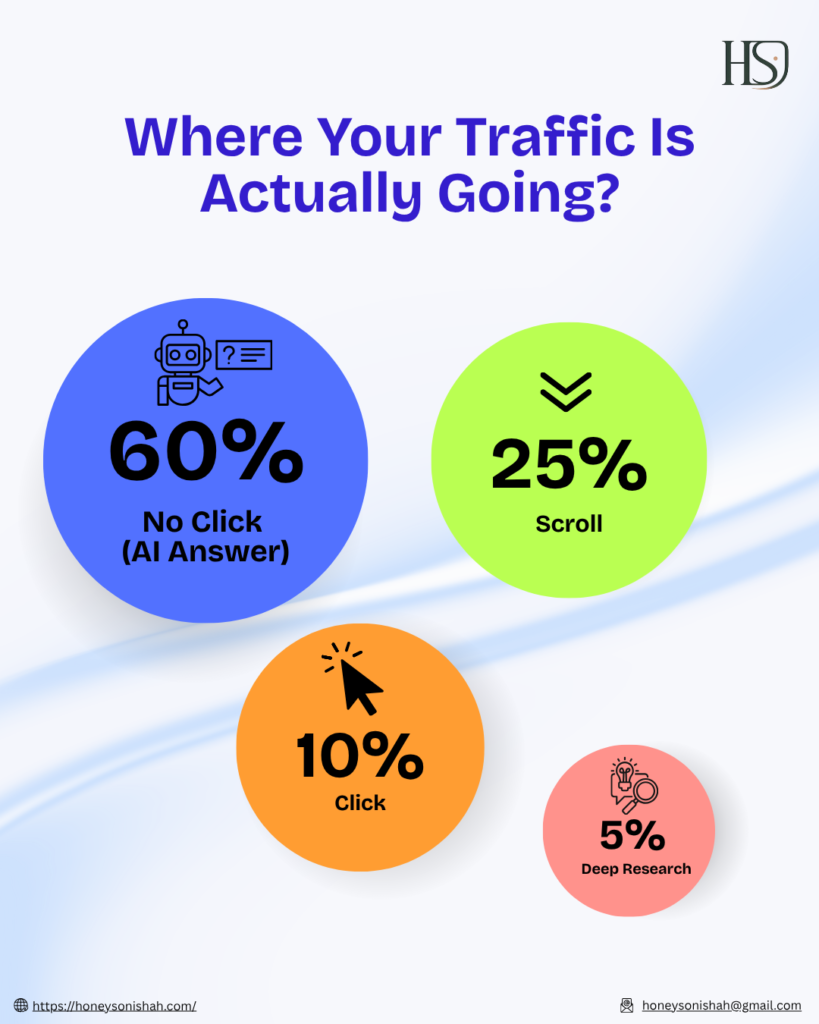
- Around 60% of searches now result in zero clicks
- AI Overviews reach ~2 billion monthly users
- Organic CTR drops by 34.5% to 64.4% when AI summaries appear
📉 Traffic Impact Visualization (Concept for Blog)
Before AI Overviews:
Search → Click → Website → Conversion
After AI Overviews:
Search → AI Answer → Exit (No Click)
Even academic research shows measurable impact: AI summaries can reduce traffic to content pages by ~15% in some cases
👉 The takeaway: Visibility ≠ Traffic anymore
Search Is Becoming Conversational, Not Transactional
Another major shift is how people interact with search itself.
With deeper integration of AI models like Gemini, Google now supports follow-up questions, context retention, and conversational flows. Users don’t need to restart their search, they continue it.
Instead of typing multiple disconnected queries like:
“best CRM tools” → “pricing” → “features”
They now ask:
- “What’s the best CRM for small businesses?”
- “Which one is cheaper?”
- “Does it integrate with WhatsApp?”
And Google responds like a conversation.
This changes how content needs to be created. It’s no longer about targeting isolated keywords. It’s about anticipating chains of questions and building content that supports that journey.
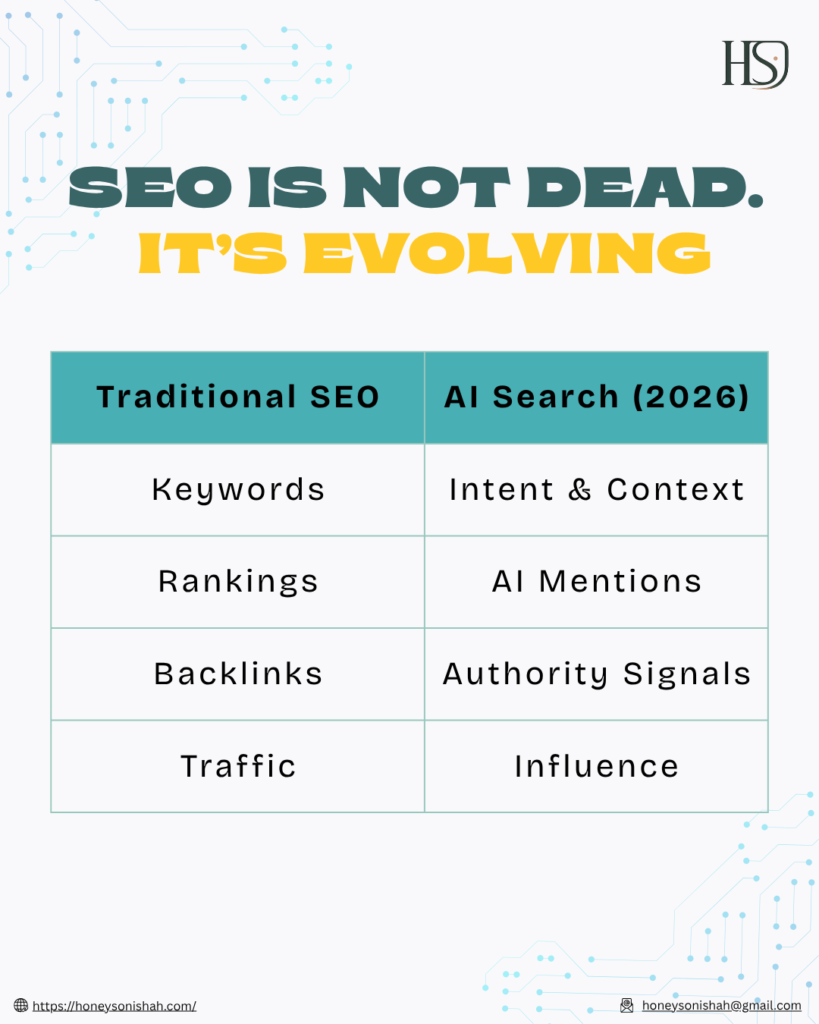
In simple terms, SEO is moving from keyword targeting to intent mapping.
Why Rankings Alone Don’t Matter Anymore?
For a long time, ranking #1 was the ultimate goal. It guaranteed visibility, clicks, and often conversions. But in the world of Google AI Search updates 2026, ranking first doesn’t guarantee anything.
If your content is not included in the AI-generated answer, you may sit at position #1 and still get ignored. On the other hand, a page ranking lower can become highly influential if it is cited or used within the AI Overview.
This introduces a new concept:
AI visibility is more important than ranking visibility.
Think of it like this:
- Traditional SEO: “How high do I rank?”
- AI SEO: “Am I being used to generate the answer?”
That subtle difference is where most marketers are currently falling behind.
The Trust Layer: Why E-E-A-T Is Now Non-Negotiable?
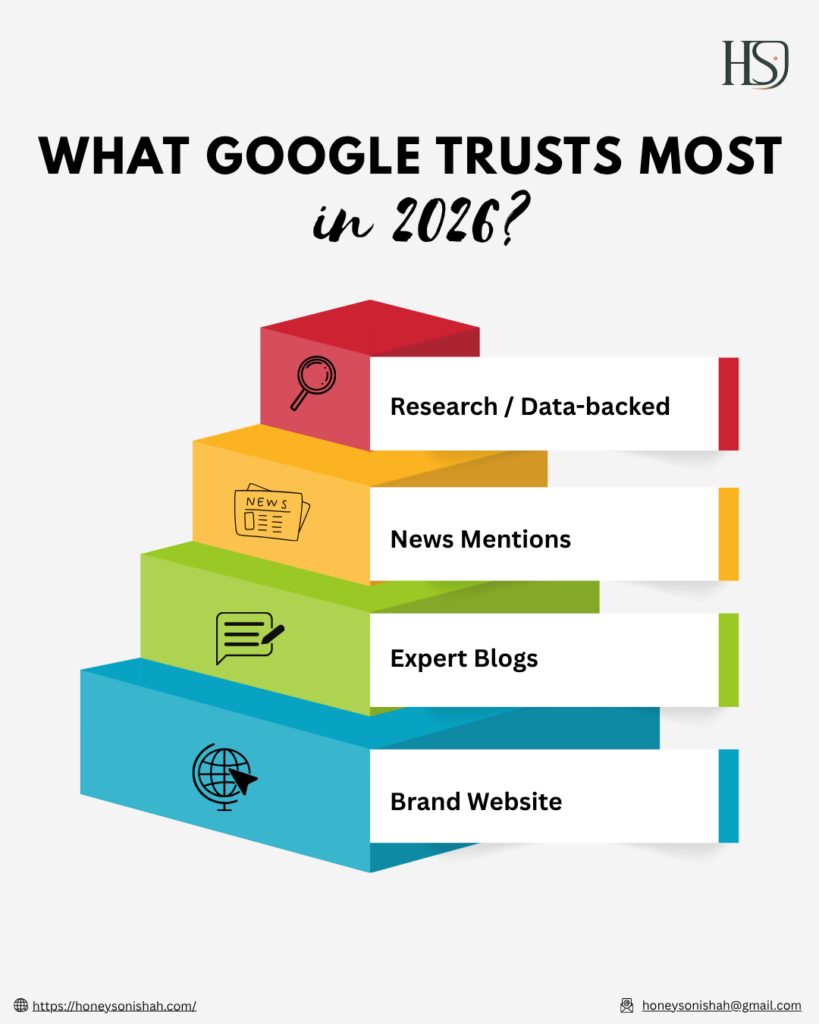
Google has been talking about E-E-A-T (Experience, Expertise, Authority, Trust) for years. In 2026, it’s no longer a guideline, it’s a filter. AI systems don’t just scan your page. They evaluate:
- Who wrote it
- Whether the author has real experience
- Whether the brand is mentioned elsewhere
- Whether other trusted sources validate your claims
This is why generic, AI-generated content is struggling. It may be well-written, but it lacks depth, credibility, and real-world signals.
Studies indicate that nearly 78% of users trust content more when it reflects real expertise or experience. Google is aligning with that behavior.
So if your content doesn’t demonstrate authenticity, it won’t just rank lower, it may never surface at all.
The Hidden Opportunity: AI Needs Sources (And You Can Be One)
While most marketers are focused on lost traffic, they’re missing the bigger opportunity. AI doesn’t create knowledge out of nowhere. It relies on existing content. It needs sources to learn from, extract from, and cite.
This means one thing:
If your content is structured well, factually accurate, and authoritative, it can become part of the AI’s answer system.
Even if the user doesn’t click immediately, your brand still:
- Gets exposure
- Builds trust
- Influences decisions
In many cases, this leads to delayed conversions, branded searches, or direct visits later.
So the goal is shifting from: “Get the click now” to “Become the trusted source behind the answer”.
What This Means for Your Content Strategy?
To adapt to Google AI Search updates 2026, content needs to evolve in both structure and intent.
Firstly, clarity matters more than creativity. AI systems prefer content that is easy to parse, extract, and summarize. Long, fluffy introductions and vague explanations don’t work anymore.
Secondly, depth matters more than length. A 2,000-word article that says nothing new is less valuable than a 1,000-word piece with original insights and real examples.
Thirdly, experience is becoming a differentiator. Case studies, personal observations, and real data points make your content more “usable” for AI.
For example, instead of writing:
“SEO is important for businesses”
You write:
“In a recent campaign, organic traffic dropped by 42% after AI Overviews appeared for core keywords”
That kind of specificity increases your chances of being cited.

A Data Snapshot: What’s Actually Changing
Let’s ground this with a few key numbers shaping the industry right now:
- Around 60% of searches are now zero-click
- AI-driven search traffic has grown by over 500% year-over-year
- Pages can see up to 64% drop in CTR when AI summaries appear
- Only about 8–10% of users click through after reading AI answers
These aren’t isolated trends, they’re signals of a long-term shift.
The Future: Fewer Clicks, More Influence
If we project where this is heading, the direction is clear. Search will become:
- More conversational
- More personalized
- More answer-driven
Websites won’t disappear, but their role will change. Instead of being the primary destination, they will become validation layers, places users go when they want to go deeper.
This means marketing success will depend less on raw traffic and more on:
✔ Brand recall
✔Authority
✔ Trust signals
Conclusion: Adapt or Become Visible
Google AI Search updates 2026 are not just changing SEO tactics, they’re redefining what visibility means.
You can no longer rely only on rankings, keywords, or backlinks. You need to build content that AI trusts, understands, and uses.
Because in this new ecosystem, the winners won’t be those who get the most clicks. They’ll be the ones who become the source behind the answer.
FAQs