- India Didn’t Just Digitize Payments, It Rewired Buying Behavior
- The Rise of UPI: More Than Just a Payment System
- Social Commerce in India: Commerce That Feels Like Conversation
- Where UPI + Social Commerce Become a Game-Changer
- Real-World Shift: From “Add to Cart” to “Send Payment”
- Why This Changes Marketing Fundamentals?
- The Real Advantage: Psychology, Not Technology
- What Brands Should Start Doing Now?
- Future Trends: Where This Is Headed
- Conclusion: India Is Skipping E-commerce Stages Again
- FAQs
India Didn’t Just Digitize Payments, It Rewired Buying Behavior
A few years ago, Indian e-commerce was all about websites, product pages, and checkout funnels. Brands obsessed over reducing cart abandonment, optimizing payment gateways, and improving UI/UX.
But quietly, something changed.
Today, a large portion of buying decisions in India doesn’t happen on websites at all. It happens inside chats on WhatsApp, Instagram DMs, and even Telegram groups. And the reason this model works so smoothly is because of one powerful layer sitting underneath: UPI.
The combination of UPI + social commerce in India is not just a convenience upgrade, it’s a complete behavioral shift. Payments are instant, conversations are natural, and trust is built in real time.
This is what the future of Indian e-commerce marketing looks like.
The Rise of UPI: More Than Just a Payment System
UPI has gone far beyond being a simple payment method. It has become the default financial behavior of India.
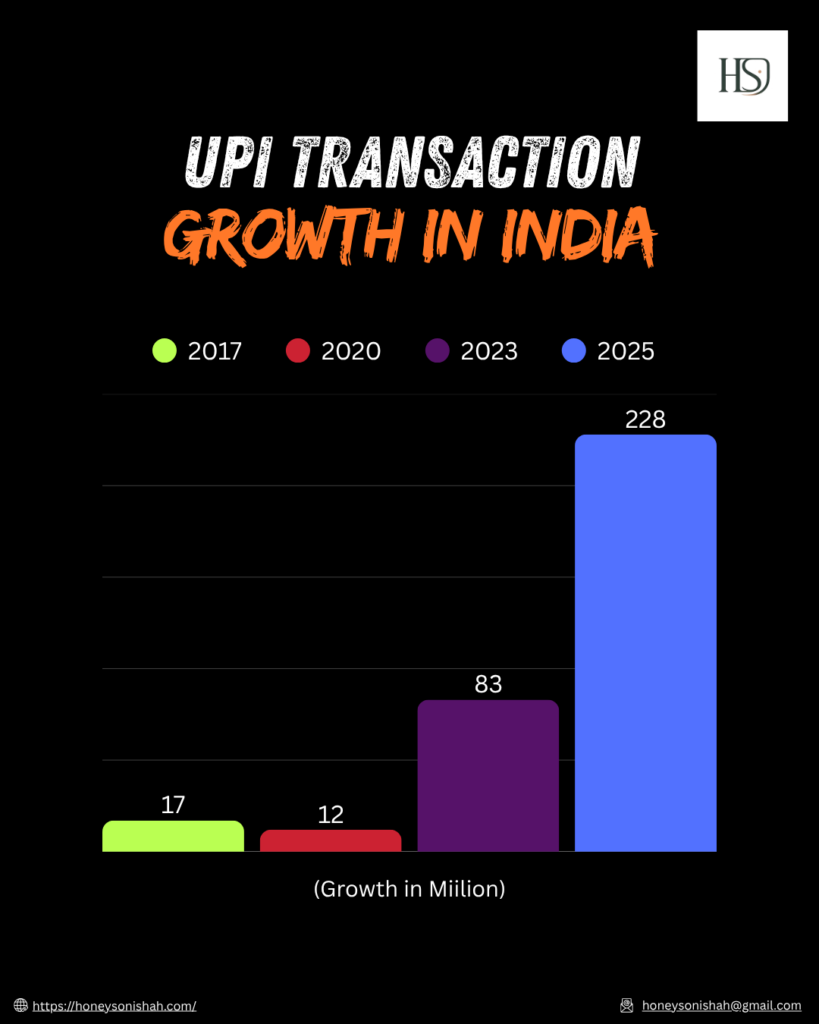
In 2025 alone, UPI processed over 228 billion transactions, with a total value crossing ₹299 lakh crore. What’s even more interesting is that growth is not just coming from high-value transactions but from everyday, small-ticket purchases.
This tells us something important: UPI is not just used when needed, it is used constantly. To put it simply:
- People pay chai vendors using UPI
- They split bills using UPI
- They shop online using UPI
- And now, they even buy directly from chats using UPI
This ubiquity changes how marketing works. When payment is frictionless, decision-making becomes faster.
Social Commerce in India: Commerce That Feels Like Conversation
Social commerce in India is not just about selling on Instagram shops. It’s much more organic and informal.
Think about how people actually buy:
- Someone sees a product on Instagram.
- They don’t immediately go to a website.
- They send a DM.
- “Price?”
- “Available in black?”
- “Delivery kab tak?”
That conversation is the buying journey.
This is why social commerce is growing rapidly, especially in Tier 2 and Tier 3 markets. It aligns perfectly with how Indians naturally interact through conversation, trust, and validation.
Some key drivers behind this shift include:
👉 Trust-first mindset: People feel more confident talking to a seller than browsing a website
👉 Language comfort: Conversations happen in Hindi, Gujarati, Tamil whatever feels natural
👉 Low-tech entry: Sellers don’t need websites, just a phone and WhatsApp
Where UPI + Social Commerce Become a Game-Changer
Now combine both worlds.
Earlier, even if a conversation happened, the user still had to jump to a website, add to cart, and complete payment. That’s where drop-offs happened.
UPI removes that friction entirely.
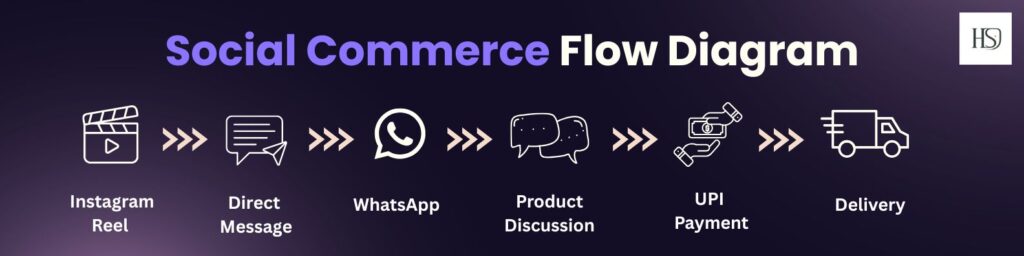
Now the journey looks like this:
- Discovery through content (Instagram, reels, ads)
- Conversation through chat (WhatsApp, DM)
- Decision through trust (real-time replies)
- Payment through UPI (instant, one tap)
No redirects. No friction. No delay.
This is why UPI social commerce in India is becoming so powerful, it compresses the entire funnel into a single interaction.

Real-World Shift: From “Add to Cart” to “Send Payment”
If you observe small and mid-sized businesses across India, you’ll notice a pattern.
They are no longer investing heavily in complex websites. Instead, they are building WhatsApp-first businesses.
A typical flow looks like this:
- Product catalog shared via WhatsApp broadcast
- Customer replies with interest
- Seller shares details, images, testimonials
- Payment link or QR sent instantly
- Order confirmed within minutes
This model works surprisingly well because it reduces both technical complexity and user hesitation.
In fact, merchant UPI transactions are growing faster than peer-to-peer payments, indicating that UPI is increasingly being used for actual commerce, not just transfers.
Why This Changes Marketing Fundamentals?
This shift forces marketers to rethink everything. Earlier, the focus was on:
- Website conversion rates
- Checkout optimization
- Funnel drop-offs
Now, the focus is shifting to:
- Response speed in chats
- Trust-building in conversations
- Simplicity of payment
Let’s break the difference clearly:
Old Funnel:
Ad → Website → Product Page → Cart → Checkout → Payment
New Funnel:
Content → Conversation → Trust → UPI Payment
The biggest difference?
The new funnel is shorter, faster, and more human.
The Real Advantage: Psychology, Not Technology
What makes this model powerful is not just UPI or social media, it’s the psychology behind it. Indian consumers don’t just look for convenience. They look for reassurance.
A website can show product features. But a conversation can answer doubts instantly. That subtle difference changes everything.
- “Is this original?” → answered instantly
- “Can I return?” → clarified immediately
- “Discount milega?” → negotiated in real time
Once trust is built, UPI makes the payment effortless.
What Brands Should Start Doing Now?
If you’re thinking long-term, this is not optional anymore. It’s already happening. Instead of jumping into tactics blindly, focus on adapting your approach:
First, rethink your funnel.
Your goal should not just be website traffic, it should be initiating conversations.
Then, simplify your payment layer.
UPI should be visible everywhere, QR codes, payment links, even inside chat replies.
And most importantly, build systems around speed and trust:
- Quick responses
- Real product visuals
- Testimonials inside chats
- Human-like interaction
Because in this model, conversation quality directly impacts conversion rate.

Future Trends: Where This Is Headed
The current model is just the beginning. Over the next few years, this space will evolve rapidly.
We’ll likely see:
- UPI embedded directly inside chat apps, removing even the need for external apps
- AI-powered chat assistants handling product queries and sending payment links
- Creator-led selling, where influencers close sales directly via DMs
- Voice-based commerce in regional languages, especially in Bharat markets
The direction is clear: commerce will become more invisible, conversational, and instant.
Conclusion: India Is Skipping E-commerce Stages Again
India never followed the traditional path. It skipped credit cards and went straight to UPI. It skipped desktop and went mobile-first. Now, it’s skipping traditional e-commerce funnels too.
UPI + social commerce is not just an upgrade, it’s a new model altogether. The brands that understand this shift early will not just adapt, they’ll dominate.
Because the future of Indian e-commerce is simple:
Start a conversation. Build trust. Get paid instantly.
FAQs