- Introduction
- What is Zero-Click Marketing?
- Why Website Traffic Is No Longer Enough?
- Why Zero-Click Marketing Is Growing Fast?
- Traditional Funnel vs Zero-Click Funnel
- Real Example: Local Service Business
- 7 Powerful Zero-Click Marketing Strategies
- Metrics That Matter More Than Traffic
- Common Mistakes Businesses Make
- Does This Mean Websites Are Dead?
- Final Thoughts
- FAQs
Introduction
For more than a decade, digital marketing followed a predictable formula. A business would run ads, publish blogs, rank on Google, drive people to a website, and then try to convert them into leads or customers. Website traffic became the most common measure of success. If traffic increased, marketers celebrated. If traffic dropped, panic started.
But buyer behavior has changed dramatically.
Today, people discover businesses through Instagram Reels, trust brands through Google reviews, compare products on Amazon, message sellers on WhatsApp, and ask AI tools for recommendations. In many of these journeys, the website is no longer the first destination. Sometimes it is never visited at all.
This shift has created a new opportunity called Zero-Click Marketing.
It is the strategy of generating awareness, trust, leads, and sales directly on the platforms where attention already exists without forcing users to click through to your website first.
For businesses still relying only on traffic reports, this change may feel threatening. For businesses that adapt early, it can become a massive competitive advantage.
What is Zero-Click Marketing?
Zero-click marketing means helping customers complete meaningful actions without needing to visit your website.
That action could be contacting you, booking a consultation, requesting pricing, placing an order, or purchasing through a third-party platform. Instead of pushing people through a long funnel, you reduce steps and meet them where they already spend time.
A customer may search for a local dentist and call directly from Google Maps. A founder may read a strong LinkedIn post and send a message asking for a proposal. A shopper may discover your product on Instagram but buy from Amazon because checkout feels easier.
In each of these examples, the conversion happened with little or no website involvement.
This is not about replacing websites entirely. It is about accepting that the modern buying journey is fragmented across platforms and designing your marketing accordingly.
Why Website Traffic Is No Longer Enough?
Many businesses still chase traffic because it is easy to measure. But traffic alone does not guarantee revenue.
A website can receive thousands of monthly visitors while generating weak leads, low purchase intent, or no sales at all. At the same time, another business with far fewer visitors may close premium clients every month through direct messages, calls, referrals, and marketplace orders.
That is why modern marketers focus on commercial outcomes rather than vanity metrics.
Instead of asking, “How many visitors came to the website?” smart businesses ask:
- How many qualified conversations started?
- How many calls were booked?
- How many repeat customers purchased again?
- How much revenue came from social platforms?
- How many leads converted into paying clients?
This shift from traffic metrics to business metrics is one of the most important mindset changes in marketing today.
Why Zero-Click Marketing Is Growing Fast?
The growth of zero-click behavior is happening because users value convenience more than ever.
People do not want to open multiple tabs, fill long forms, verify email addresses, and wait for responses. They want immediate answers and low-friction decisions.
If someone can tap a call button on Google, message you on WhatsApp, or purchase through a trusted marketplace in seconds, that usually feels easier than navigating an unfamiliar website.
Mobile behavior has accelerated this trend. Most users browse while multitasking. They scroll quickly, compare quickly, and decide quickly. Long funnels lose these buyers. Short journeys win them.
At the same time, platforms themselves are encouraging zero-click actions. Social apps want users to stay inside the app. Marketplaces want transactions on-platform. Search engines increasingly show answers directly in results.
The internet is moving toward fewer clicks and faster outcomes.
Traditional Funnel vs Zero-Click Funnel
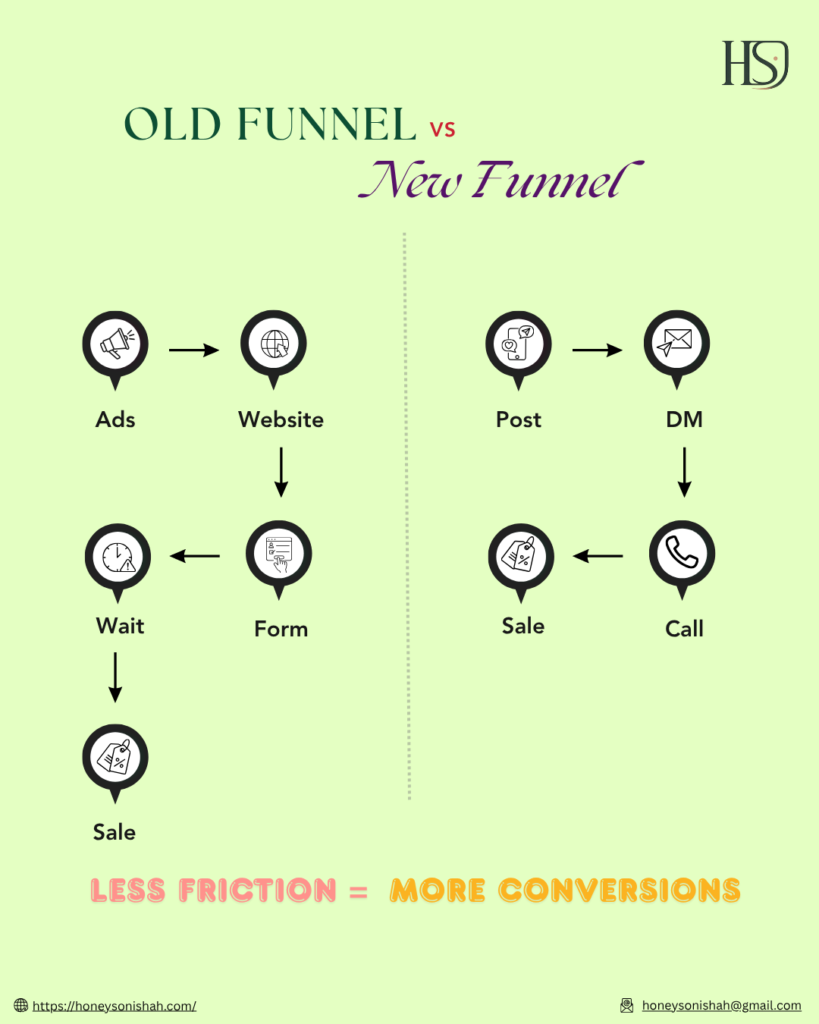
The traditional digital funnel looked like this:
Ad → Landing Page → Form Fill → Follow-up → Sale
That model can still work, but it often contains too much friction. The zero-click funnel looks more like this:
Content → Message → Call → Sale
Or:
Google Search → Reviews → Call Now
Or:
Instagram Reel → DM → Purchase Link
These newer paths feel more natural because they match how users already behave online.
Real Example: Local Service Business
Imagine someone searching: “Best skin clinic near me”
They see a Google Business Profile with:
- 4.8-star reviews
- before/after photos
- pricing highlights
- open hours
- tap-to-call button
Many users will call instantly. They will never visit the clinic’s website.
Now compare that with a clinic that only invests in website SEO but ignores Google reviews, photos, and response speed. Even with rankings, they may lose conversions.
This is why zero-click assets are becoming essential.
7 Powerful Zero-Click Marketing Strategies
1. Turn Social Media Into a Conversion Channel
Many businesses still use social media only for awareness. They post motivational quotes, generic creatives, or random trends without any path to action.
That wastes attention.
Every post should gently move the audience toward the next step. Sometimes that step is trust. Sometimes it is a conversation. Sometimes it is a sale.
For example, a consultant can post:
“Most businesses don’t have a lead problem, they have a conversion problem. If you’d like a free audit, message AUDIT.”
This transforms content into demand generation.
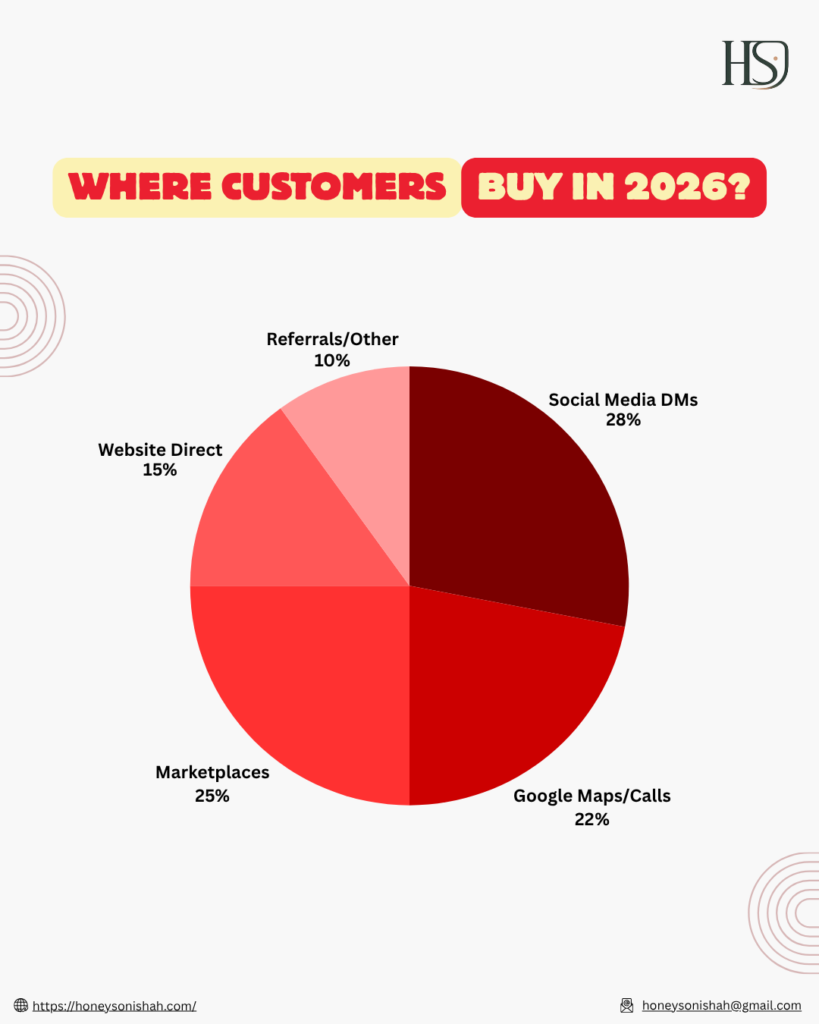
2. Use Direct Messages as a Funnel
Direct messages are often more effective than forms because they feel human.
A person who fills a form may hesitate, abandon midway, or submit fake details. A person who messages you directly usually has clearer intent.
That makes platforms like Instagram, LinkedIn, Facebook, and WhatsApp extremely valuable.
Instead of saying “Visit our website,” try:
- DM for pricing
- Message to book a consultation
- WhatsApp us for catalogue
- Reply YES for details
The easier it is to start a conversation, the more leads you create.
3. Build a Strong Google Business Profile
For local businesses, your Google Business Profile may be more important than your homepage.
Customers check reviews, photos, directions, operating hours, services, and FAQs before deciding. Many never click the website button.
This means your listing should be treated like a revenue asset, not an afterthought.
Businesses that regularly collect reviews, upload fresh photos, answer questions, and respond quickly often outperform competitors with better websites but weaker local presence.
| Headline: Intent Beats Traffic 100,000 Visitors = 40 Sales 5,000 Warm Leads = 120 Sales |
4. Sell Through WhatsApp
In markets like India, WhatsApp has become one of the strongest conversion channels.
Customers are comfortable messaging businesses there because it feels direct, personal, and fast. They can ask questions, receive product images, negotiate pricing, confirm availability, and place repeat orders easily.
For service businesses, it can be used to qualify leads, share proposals, send payment links, and confirm appointments.
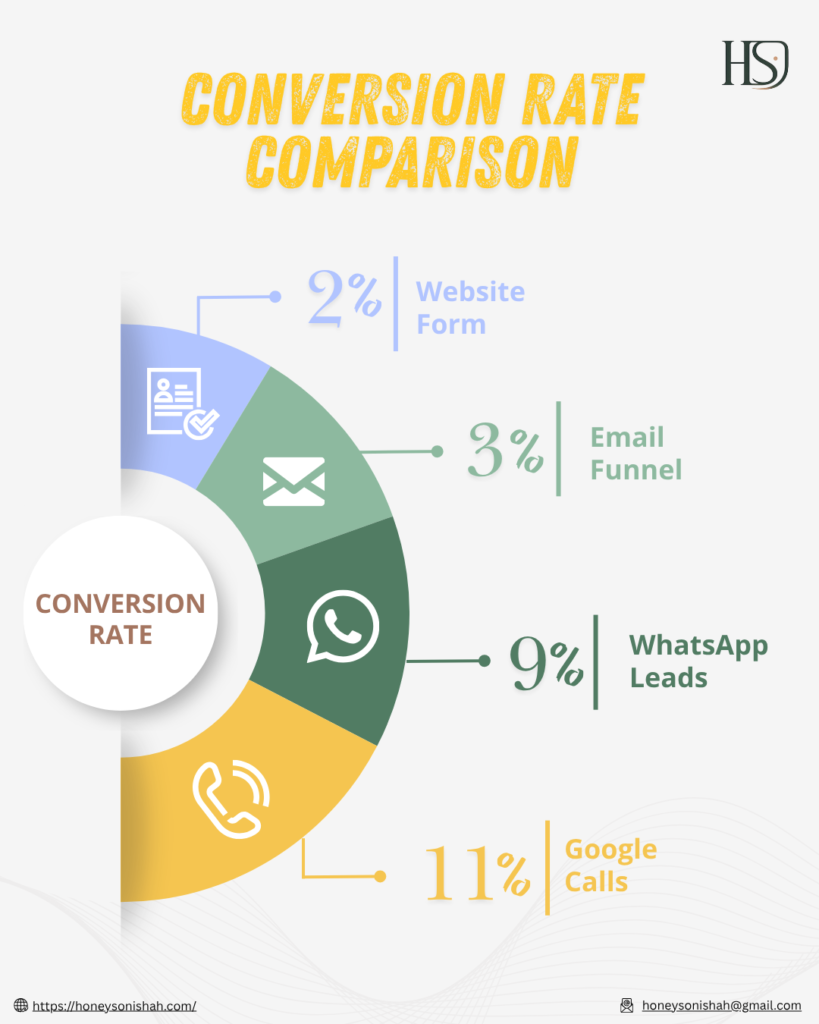
For many businesses, WhatsApp converts better than email.
5. Use LinkedIn for B2B Lead Generation
If you sell services to founders, managers, or decision-makers, LinkedIn can become a powerful zero-click sales engine.
A well-written post about industry mistakes, growth lessons, or case study results can attract inbound leads without paid ads or landing pages.
For example:
“We reduced CPL by 38% after fixing tracking, not by increasing ad spend.”
That kind of insight attracts serious buyers. They often message directly asking how it was done.
No website visit required.
| Platform | Avg Conversion Opportunity Rate | Why it ranks high? |
|---|---|---|
| 18-28% | Direct conversations, instant replies, personal trust | |
| Google Business Profile | 15-25% | High intent searches, calls, maps, reviews |
| 8-18% | Strong discovery + DM selling + Reels reach | |
| 6-15% | High-value B2B leads, decision-maker audience | |
| Amazon | 10-20% | Strong buying intent, trusted checkout |
| YouTube Shorts | 3-10% | Awareness-heavy, works well with CTA to DM/call |
6. Leverage Marketplaces for Trust
Smaller brands often struggle because users do not trust unknown websites immediately.
Marketplaces solve this through familiar checkout systems, ratings, reviews, delivery promises, and return policies.
That is why many D2C brands generate early traction through Amazon, Flipkart, Etsy, or niche platforms before pushing customers to their own stores later.
Sometimes the best zero-click strategy is borrowing trust before building your own.
7. Become Discoverable in AI Search
Consumers increasingly ask AI tools for recommendations instead of browsing ten websites.
Queries like:
- best performance marketing agency in Ahmedabad
- affordable CRM for startups
- top nutrition brands in India
If your brand appears consistently across directories, case studies, social proof, reviews, and expert content, AI systems are more likely to mention you.
That means brand presence across the web matters as much as website SEO.
Metrics That Matter More Than Traffic
A drop in website traffic is not always bad if business outcomes improve. Instead of obsessing over sessions, focus on:
- Qualified inbound messages
- Calls booked
- Response rate
- Lead-to-sale conversion rate
- Revenue per customer
- Repeat purchase rate
- Cost per qualified lead
- Sales cycle length
These numbers reveal whether marketing is helping the business grow. Traffic alone does not.
Common Mistakes Businesses Make
One of the biggest mistakes is treating the website as the only place where selling can happen.
Another mistake is creating content with no next step. If a post gets attention but gives users no action to take, opportunities disappear.
Slow response times also kill zero-click conversions. If someone messages now and receives a reply tomorrow, intent may already be gone.
Finally, many businesses underestimate social proof. Reviews, screenshots, testimonials, results, and real customer stories build confidence faster than polished branding alone.
Does This Mean Websites Are Dead?
Not at all.
Websites still matter for credibility, long-form education, SEO visibility, remarketing, case studies, analytics, and owned customer journeys.
But websites are no longer the only growth engine.
Think of your website as headquarters, not the only store in town.
Modern buyers may discover you elsewhere, trust you elsewhere, and even buy elsewhere.
Your job is to make that easy.
Final Thoughts
The future of marketing is not about forcing users through outdated funnels. It is about reducing friction between attention and action.
- If people want to call from Google, let them call.
- If they prefer WhatsApp, meet them there.
- If B2B buyers trust LinkedIn thought leadership, show up consistently.
- If shoppers prefer marketplaces, optimize those listings.
The smartest brands in 2026 will not ask only, “How do we get more traffic?”
They will ask, “How do we make buying easier?”
That is the heart of zero-click marketing.
FAQs