- Introduction
- The Rise of Zomato: From Startup to Global Food Brand
- Core Marketing Strategy Behind Zomato's Success
- ⭐ Building a Brand Personality That People Relate To
- ⭐ Dominating Social Media with Relatable Content
- ⭐ Data-Driven Personalization
- ⭐ Loyalty Programs that Increase Customer Retention
- ⭐ Aggressive Advertising and Performance Marketing
- Impactful Insight
- ⭐ Influencer Marketing and Partnerships
- ⭐ Expansion into New Services
- ⭐ Smart Push Notifications and App Engagement
- Conclusion
- FAQs
Introduction
“Have you ever ordered food just because a funny Zomato notification appeared on your phone?”
THAT’S THE POWER OF SMART MARKETING.
Food delivery platforms have transformed the way people order food, and Zomato is one of the biggest examples of this transformation. From a small restaurant discovery website started in 2008 to becoming one of the largest food-tech companies in India, Zomato’s journey is a powerful example of how smart marketing, strong technology, and customer-centric strategies can build a global brand.
Zomato’s marketing strategy focuses on social media engagement, data-driven personalization, loyalty programs, and aggressive digital advertising. These strategies helped Zomato become one of India’s largest food delivery platforms.
Today, Zomato operates across multiple services such as restaurant discovery, food delivery, dining-out services, and quick commerce through Blinkit. With millions of users and billions in revenue, its growth has been fueled not just by technology but by a brilliant marketing strategy.
In this blog, we will analyze the Zomato marketing strategy, understand the tactics behind its growth, and see how the company turned food delivery into a lifestyle product.
The Rise of Zomato: From Startup to Global Food Brand
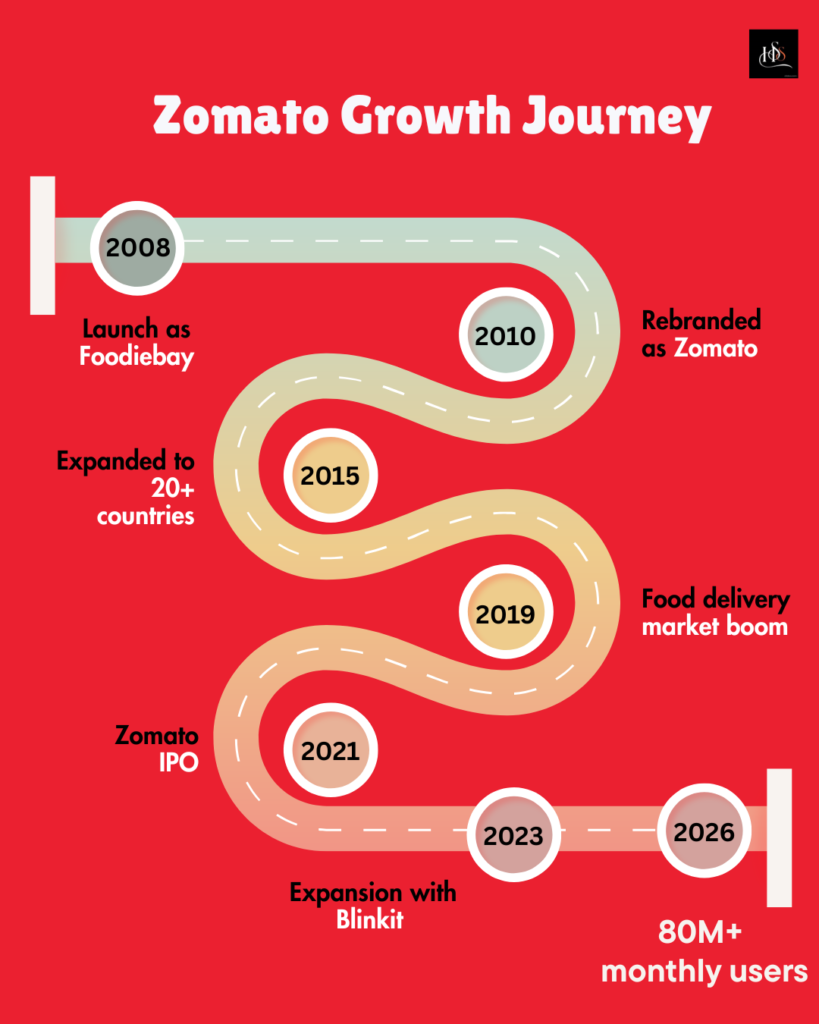
Zomato was founded in 2008 by Deepinder Goyal and Pankaj Chaddah as a restaurant discovery platform called Foodiebay. The idea was simple: make restaurant menus easily accessible online.
What began as a small idea quickly expanded into a large platform covering thousands of restaurants and millions of users. Over time, Zomato evolved from a discovery platform into a full-fledged food delivery ecosystem.
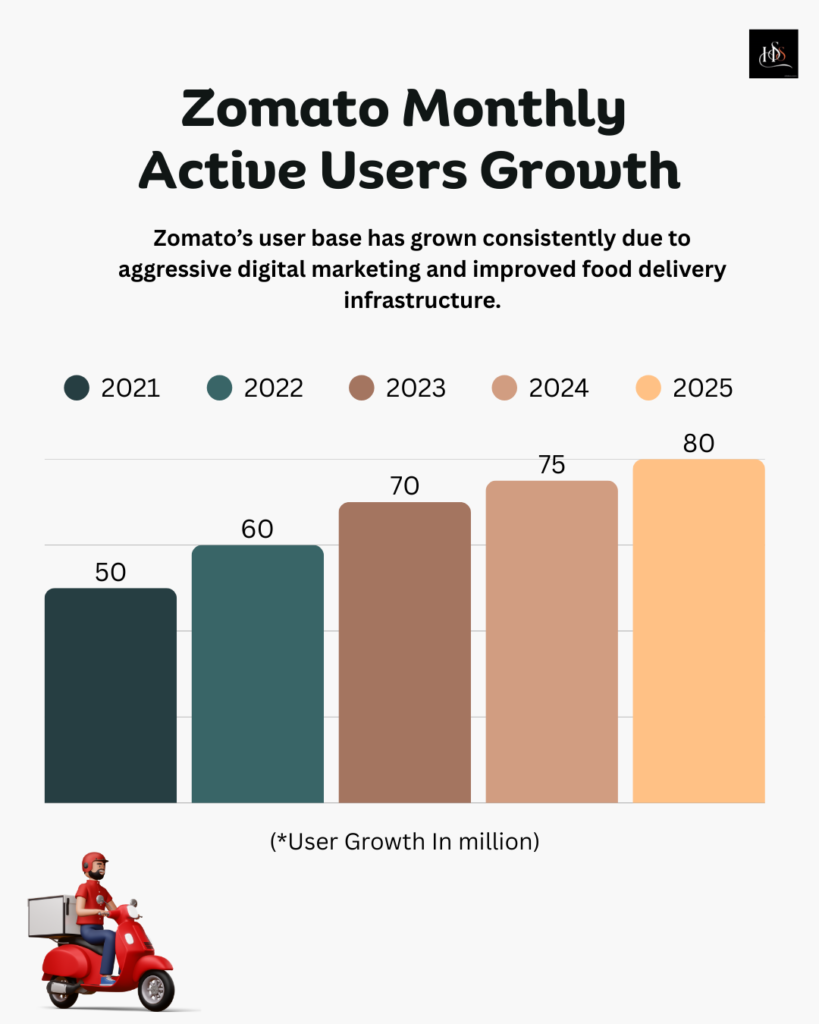
By 2025, Zomato had crossed 80 million monthly app users, highlighting its massive digital reach.
Another key indicator of growth is revenue. Zomato reported ₹20,243 crore in consolidated revenue for FY2024-25, marking around 67% year-on-year growth.
These numbers show how effective its marketing and growth strategies have been.
Core Marketing Strategy Behind Zomato’s Success
⭐ Building a Brand Personality That People Relate To
One of the most powerful elements of Zomato’s marketing strategy is its unique brand voice.
Unlike traditional brands that maintain a formal tone, Zomato uses a humorous, witty, and relatable communication style. Whether it is push notifications, social media posts, or billboards, the brand consistently communicates in a casual and engaging tone.
Examples include:
😜Funny push notifications like “Your fridge is empty. We checked.”
🎭 Meme-based marketing campaigns
💬 Humorous tweets and responses to customers
This strategy makes the brand feel human and conversational, which significantly improves engagement and brand recall.
In fact, campaigns like #ZomatoMemes generated more than 120 million impressions and thousands of user-generated posts within a short period.
Instead of sounding like a company, Zomato sounds like a friend who knows your food cravings.
⭐ Dominating Social Media with Relatable Content
Social media marketing plays a major role in Zomato’s digital marketing strategy.
The company uses platforms like:
✓ Instagram
✓ X (Twitter)
✓ YouTube
✓ Facebook
Each platform has a slightly different content style, but the goal remains the same: engagement through humor and relatability.
For example:
This multi-platform strategy helps Zomato stay visible across different audience segments. Social media campaigns also generate user-generated content, which significantly increases organic reach.
⭐ Data-Driven Personalization
Zomato relies heavily on data analytics and AI algorithms to personalize user experiences.
The platform studies:
- Ordering Patterns
- Location Data
- Cuisine Preference
- Spending Behaviour
Based on this data, the app recommends restaurants and dishes tailored to each user. For example:
- Personalized restaurant suggestions
- Targeted promotions
- Smart recommendations based on previous orders
AI-driven recommendation systems have been shown to significantly improve user engagement and conversion rates on digital platforms. This makes ordering food faster and easier, which directly increases repeat purchases.
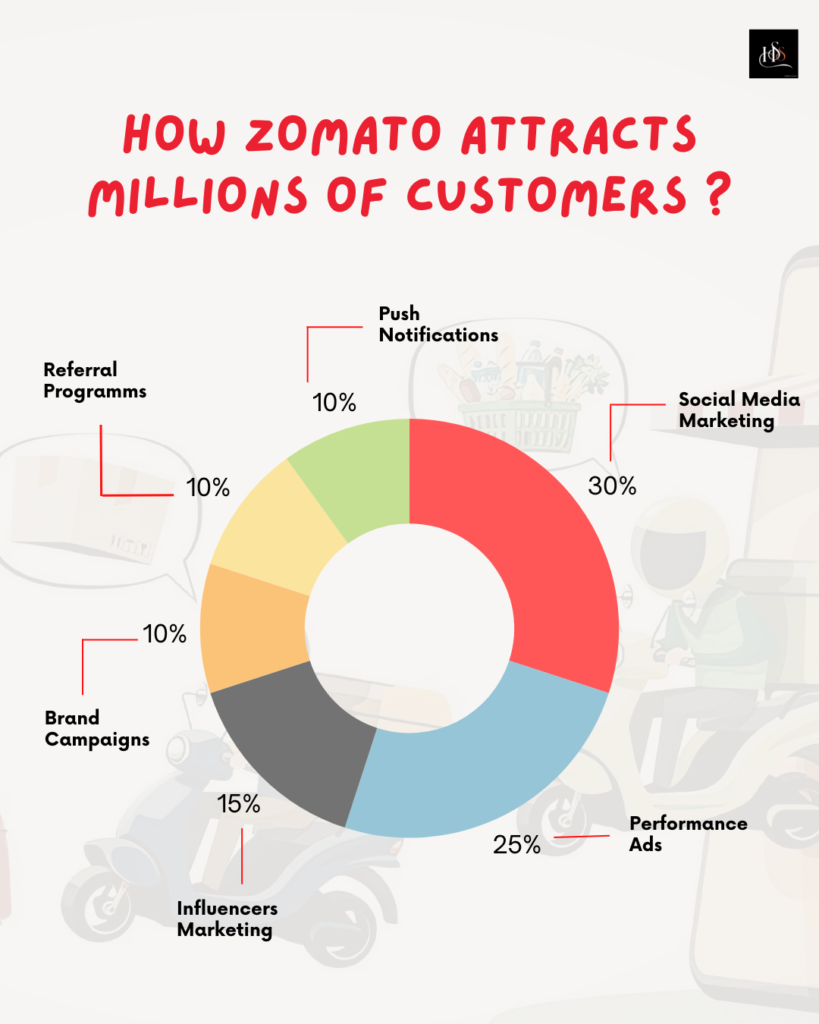
⭐ Loyalty Programs that Increase Customer Retention
Customer retention is a major focus of Zomato’s business strategy. One of the best examples is the Zomato Gold membership program. This subscription-based program offers benefits such as:
- Dining discounts
- Free delivery
- Exclusive offers
A low entry price of around ₹149 for a short membership period encouraged more people to subscribe. The result was impressive:
✅ Hundreds of thousands of memberships
✅ Nearly 40% of sales influenced by referrals and membership benefits.
Loyalty programs like this increase repeat orders and long-term customer relationships.
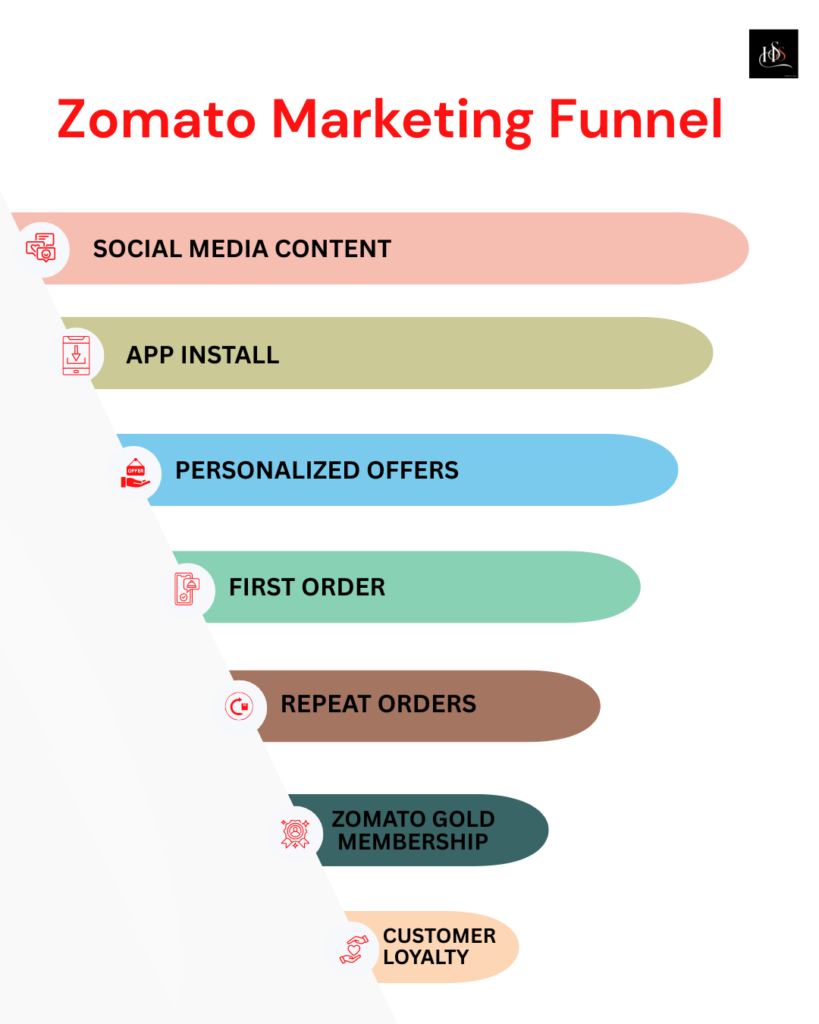
⭐ Aggressive Advertising and Performance Marketing
Another major factor behind Zomato’s growth is its aggressive marketing investment. The company spends heavily on advertising to acquire and retain users.
This includes campaigns across:
- Google Ads
- Meta Ads
- Influencer Marketing
- Offline Billboards
- Cinema Advertising
This performance marketing strategy helps Zomato stay top-of-mind whenever users think about ordering food.
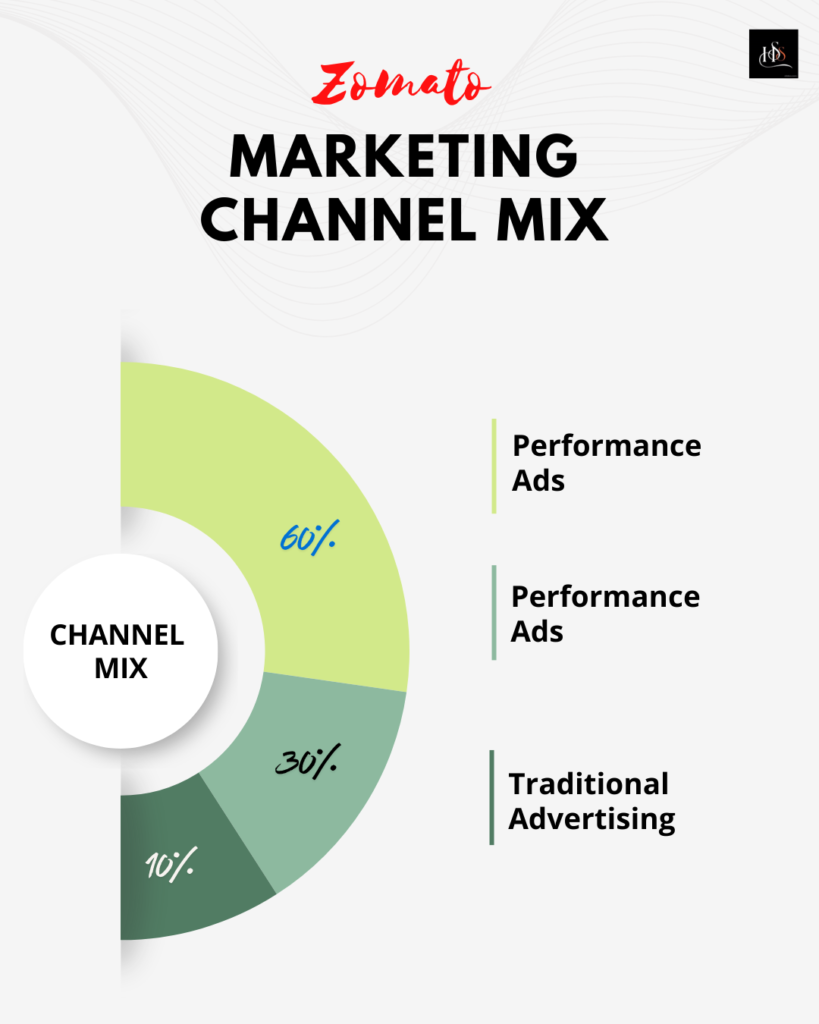
⭐ Influencer Marketing and Partnerships
Zomato collaborates with:
♦️ Food Bloggers
♦️ Instagram Creators
♦️ Regional Influencers
♦️ Celebrities
These collaborations help the brand reach local audiences in Tier-2 and Tier-3 cities. Micro-influencer campaigns in regional markets delivered around 11% engagement rates, significantly boosting app growth in smaller cities. Influencer marketing also adds authenticity, as people trust food creators more than traditional advertisements.
⭐ Expansion into New Services
Zomato’s growth strategy also involves expanding into new business verticals. Some major expansions include:
- Blinkit for quick commerce
- Hyperpure for restaurant supply chains
- Dining-out discovery services
Quick commerce has become one of the fastest-growing segments for the company. In fact, Blinkit’s order value grew over 127% year-on-year, showing strong demand in rapid delivery services. This diversification reduces dependency on food delivery alone and creates multiple revenue streams.

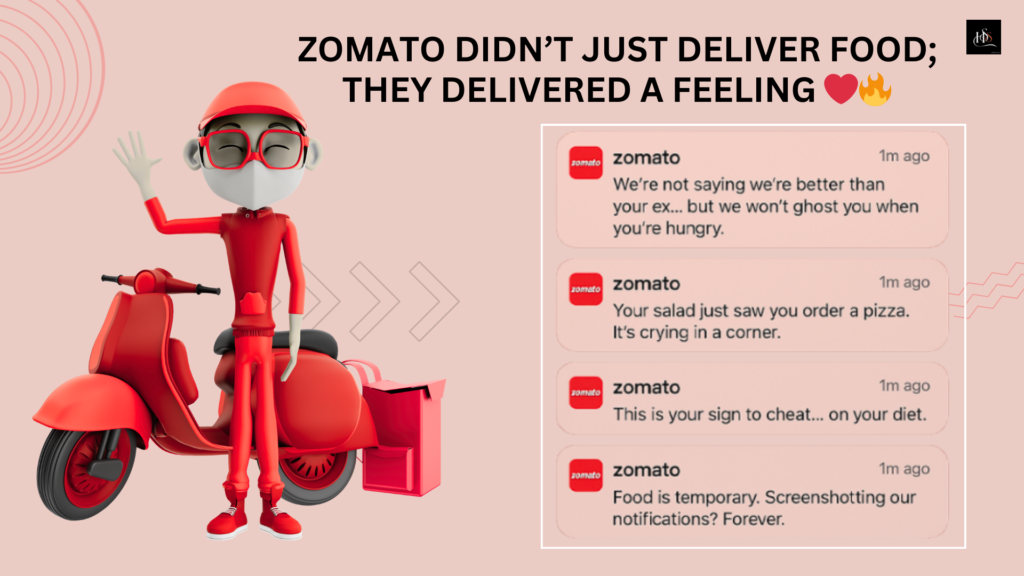
⭐ Smart Push Notifications and App Engagement
Zomato is famous for its push notifications. These notifications are not boring reminders. They are funny, witty, and often relatable.
Example:
- “Cooking is risky. Order instead.”
- “Your kitchen called. It’s tired.”
Push notifications have an open rate of around 33%, compared to around 17% for emails. This significantly improves user engagement and increases order frequency.
Conclusion
The Zomato marketing strategy is a combination of creativity, technology, data, and aggressive growth marketing. Instead of relying solely on advertising, Zomato focused on building:
These strategies helped transform Zomato from a simple restaurant discovery platform into one of the most recognized food-tech brands in India. For marketers, Zomato is a perfect case study that proves marketing success is not just about selling, it’s about building a brand people enjoy interacting with.
Key Lessons Marketers Can Learn from Zomato
- Build a relatable brand voice – Customers connect with brands that feel human.
- Invest in data and personalization – AI-driven recommendations improve user experience.
- Use humor and creativity in marketing – Creative campaigns increase shareability and organic reach.
- Focus on retention, not just acquisition – Membership programs and loyalty strategies increase lifetime value.
- Expand your ecosystem – New services create additional revenue streams and strengthen the brand.
FAQs